
Set Spotlight: 1939-1941 Play Ball (R334-R336)
REA Staff — February 01 2024
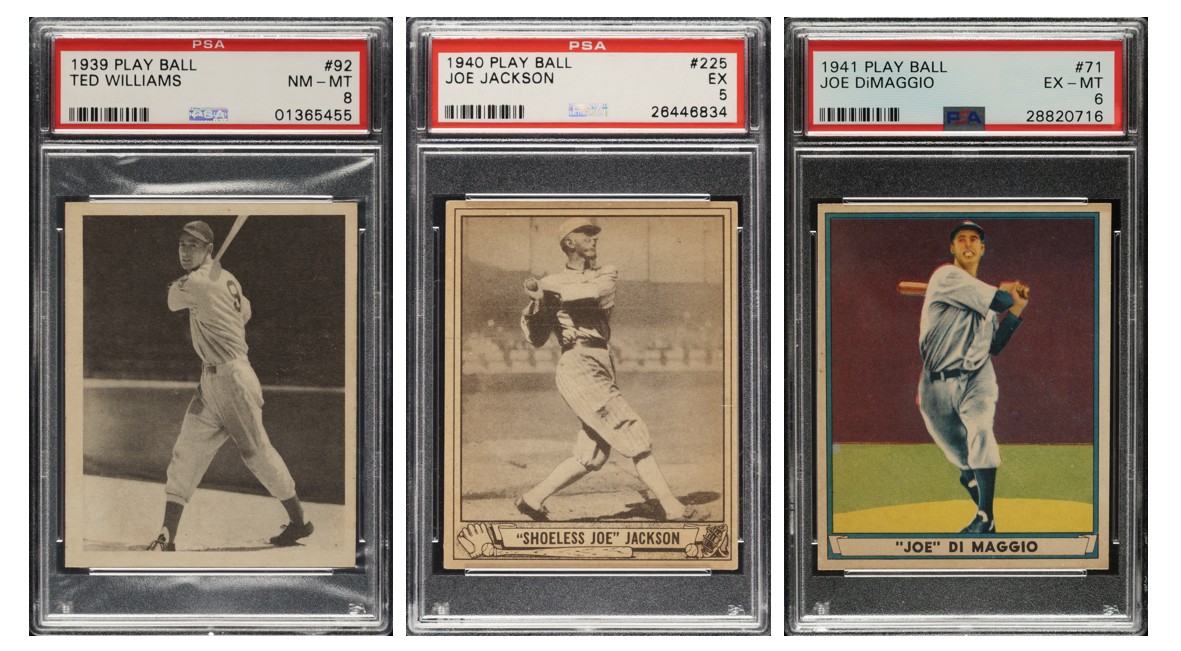
Play Ball cards from 1939-1941
Play Ball! The Last of the Prewar Gum Card Sets
Card Specs: 2" x 3.125” | 1939: 161 cards | 1940: 240 cards | 1941: 72 cards | 1939 & 1940: Black & White ; 1941: Color | Classification: Gum | R334-R336
The 1939-1941 Play Ball baseball card sets were produced by Philadelphia-based Gum, Inc. and represent the final major prewar baseball card issues before World War II halted production. The Play Ball series emerged after Goudey’s exit from the market, filling a significant void in the hobby. These sets captured the sport at a turning point while laying the groundwork for the postwar boom that would follow. Gum, Inc. founder Jacob Warren Bowman would later establish Bowman Gum, making Play Ball the direct precursor to Bowman’s influential postwar releases.
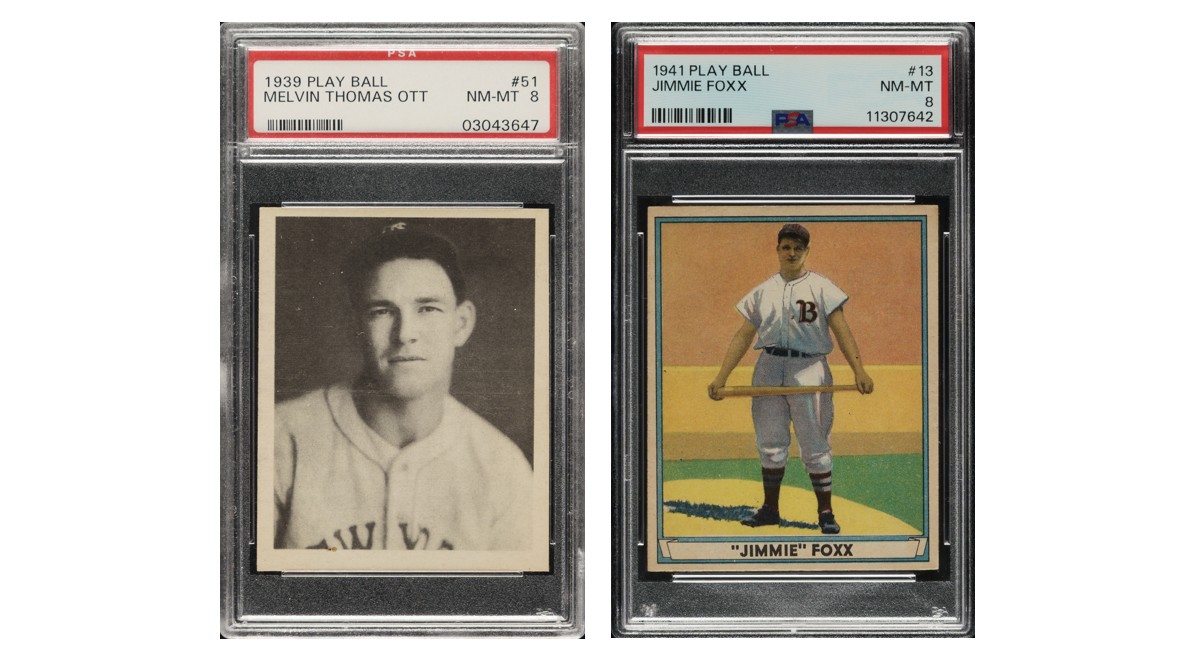
1939 Play Ball Mel Ott and 1941 Play Ball Jimmie Foxx
The three-year run is anchored by a remarkable lineup of stars and rookie cards, most notably the 1939 rookie card of Ted Williams which is regarded as one of the most important prewar cards ever issued. The sets also feature icons such as Joe DiMaggio, Jimmie Foxx, Mel Ott, and the historic inclusion of Shoeless Joe Jackson in the 1940 release. The 1941 set introduces the rookie card of Pee Wee Reese and uniquely features all three DiMaggio brothers - Joe, Dom, and Vince.
Image Evolution: Play Ball Card Design
From a design perspective, the Play Ball sets show a clear evolution. The 1939 issue consists of black & white photos with no player names on the front, requiring collectors to consult the biographical backs for identification.
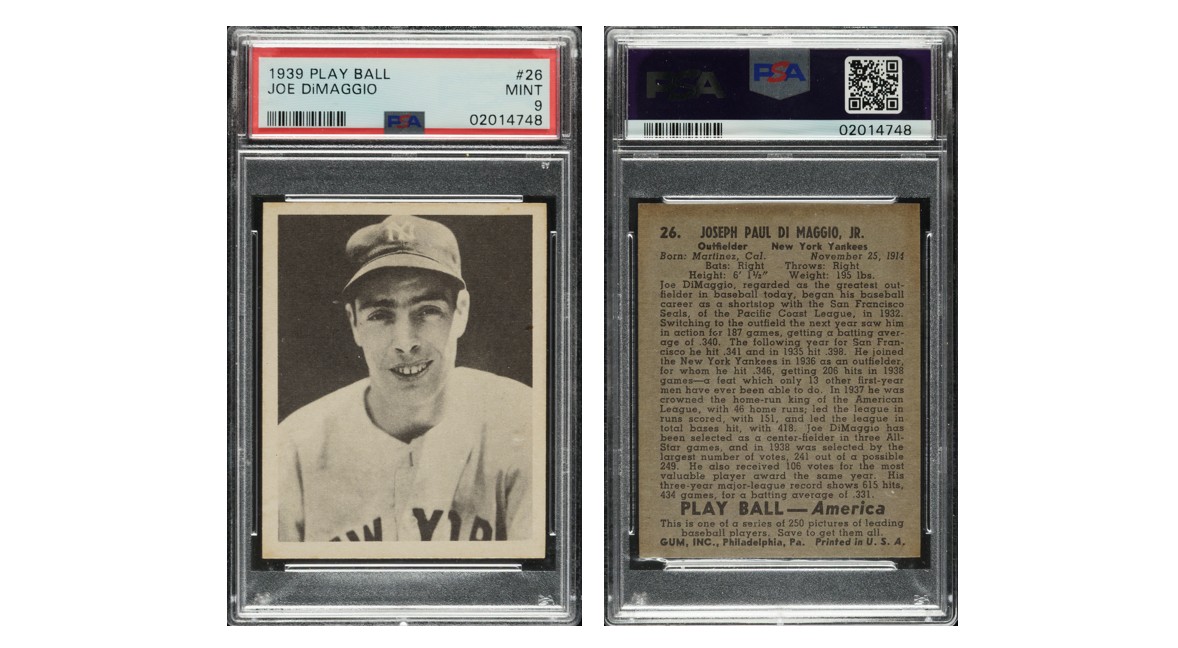
1939 Play Ball Joe DiMaggio front & back
Cards in the 1940 set included player names on the front and the use of a stylized banner and border, while maintaining the black & white photography of the previous year.
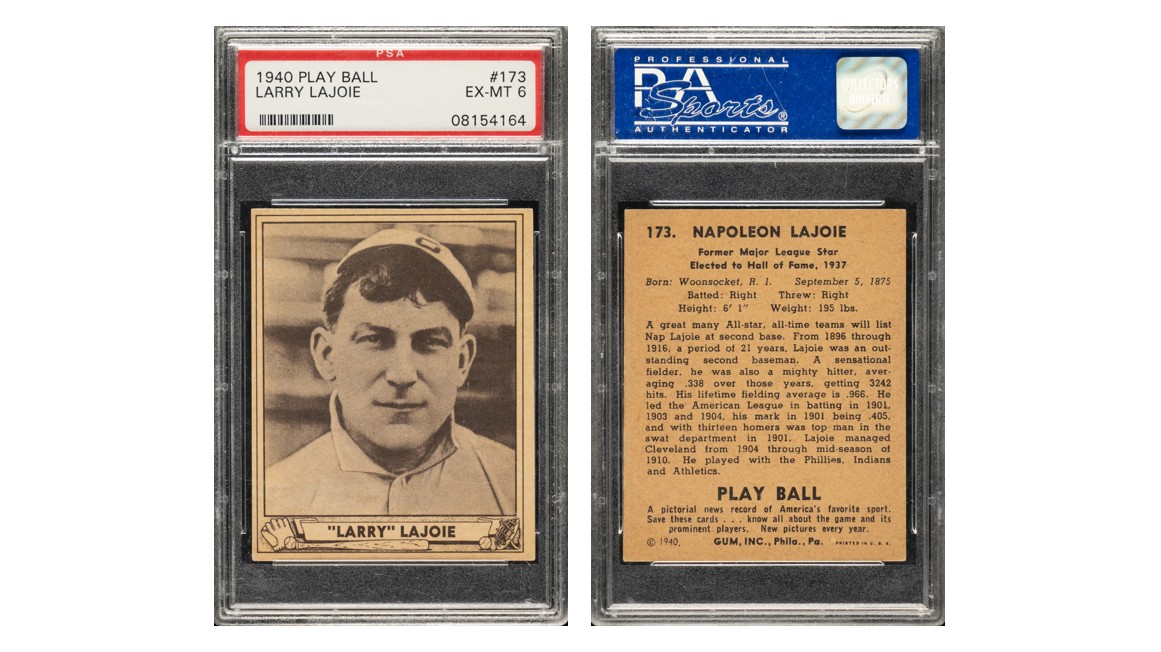
1940 Play Ball Nap Lajoie front & back
The 1941 release marked a dramatic shift, introducing vivid full-color artwork and brighter compositions, similar to gum cards of the 1930s.
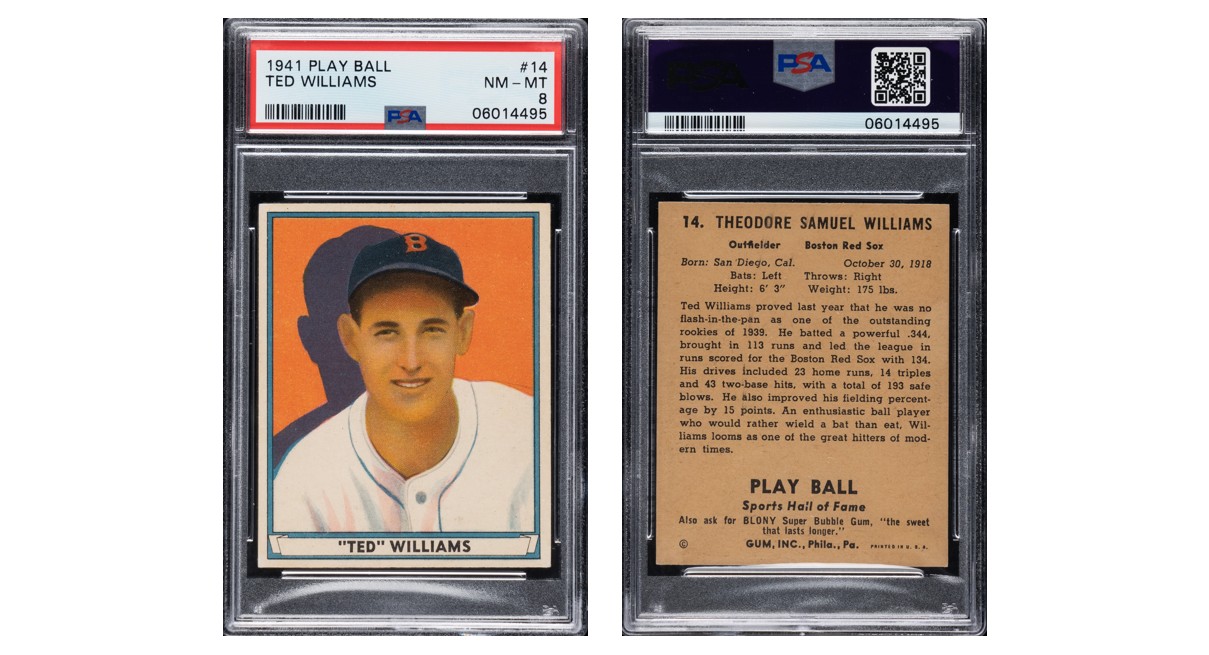
1941 Play Ball Ted Williams front & back
Play Ball Distribution: A Neighborhood Play
Play Ball cards were distributed in one-cent gum packs, typically containing a stick of gum and multiple cards, and were sold primarily through neighborhood stores and newsstands. Like many gum-era issues, the cards were handled heavily by children, leading to common condition problems in today's examples, such as rounded corners, creasing, and back damage. As a result, collectors will pay a substantial premium well-preserved examples at auction.
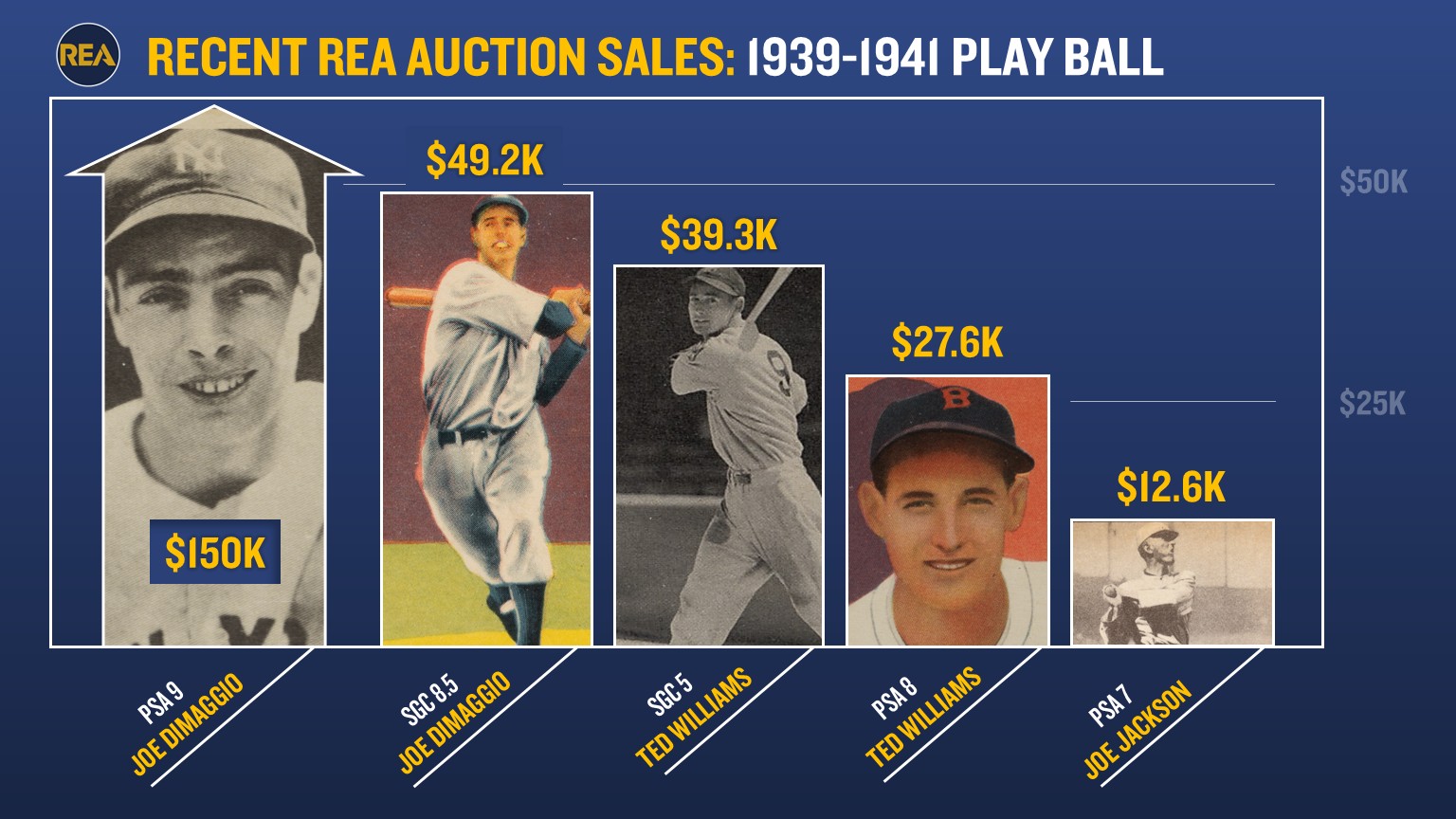
1939 Play Ball #26 Joe DiMaggio PSA 9 - $150,000 - 2025 Marketplace
1941 Play Ball #71 Joe DiMaggio SGC 8.5 - $49,200 - 2024 Fall Auction
1939 Play Ball #92 Ted Williams SGC 5 - $39,360 - 2026 Spring Auction
1941 Play Ball #14 Ted Williams PSA 8 - $27,600 - 2025 Summer Auction
1941 Play Ball #225 Shoeless Joe Jackson PSA 7 - $12,600 - 2024 Summer Auction
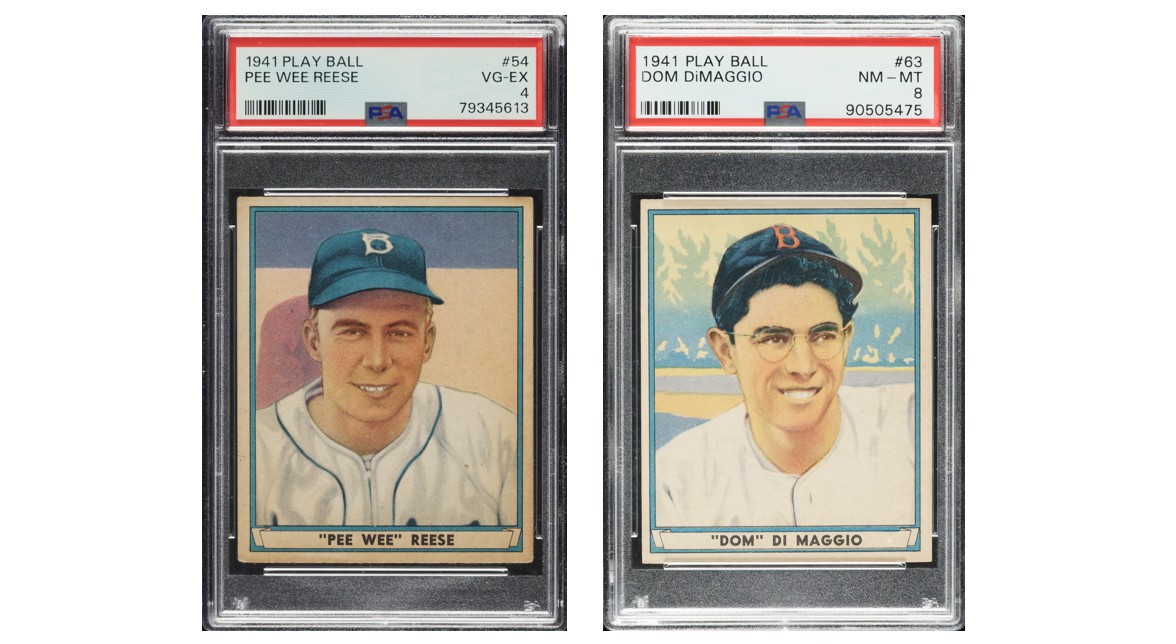
1941 Play Ball Peewee Reese and Dom DiMaggio
How to Sell Play Ball Cards
The Play Ball sets from 1939-1941 are among the most highly desired among prewar collectors. Our auctions regularly include everything from single graded cards, near complete sets, to collections of commons. We're happy to help our consignors with grading and authentication of raw examples. If you'd like to maximize the return on your cards, reach out today to connect with a specialist for a free consultation.