
Fall 2020 - Item detail
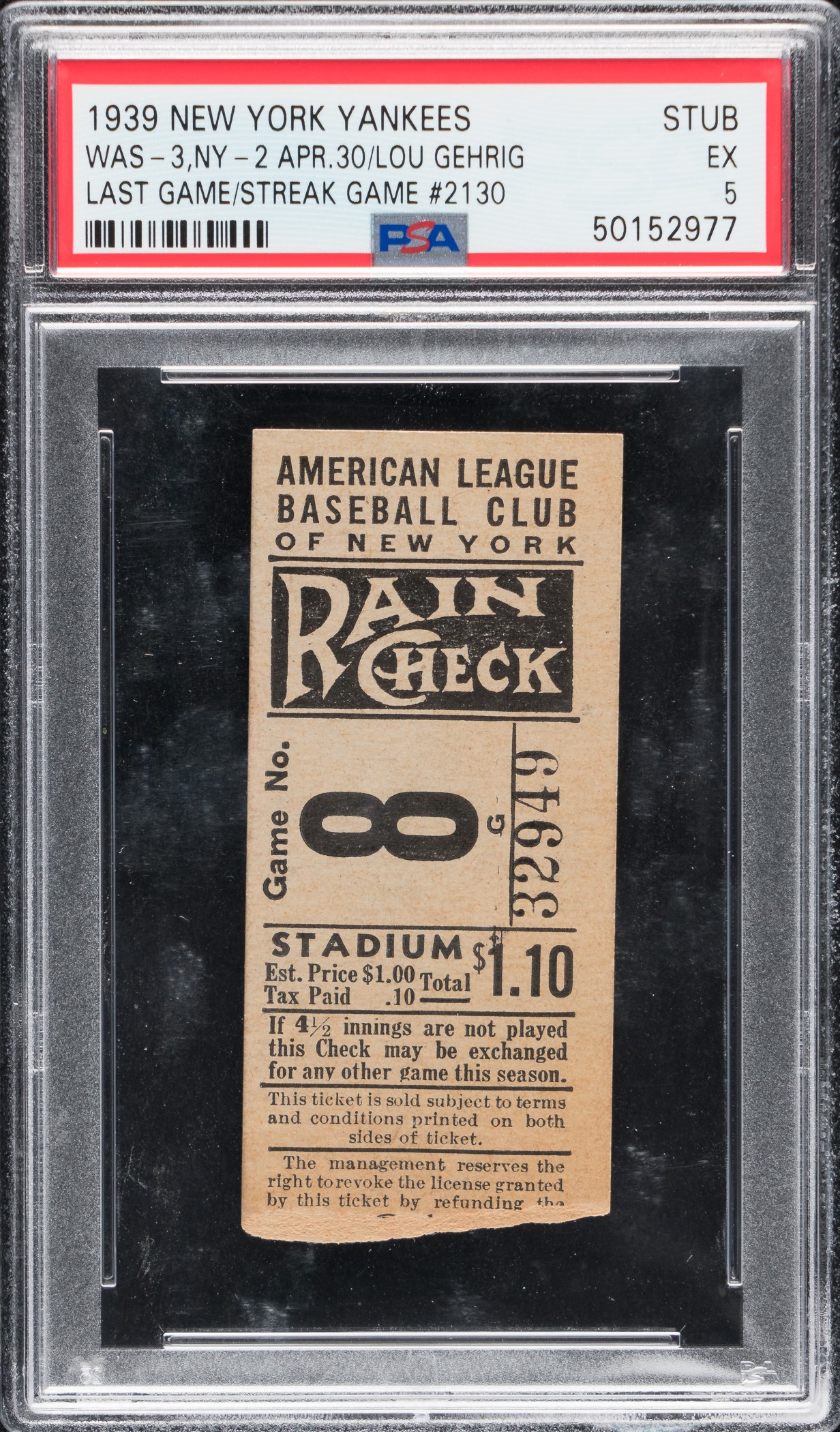
April 30, 1939 New York Yankees Ticket Stub PSA EX 5 - Lou Gehrig's Final Game - 2,130 Consecutive Game Streak Ends!
- Sold For:
- $9,300
- Year:
- 1939
- Auction:
- 2020 Fall
- Lot #:
- 2089
- Category:
- Post-1900 Baseball Memorabilia
On Sunday afternoon, April 30, 1939, a crowd of 23,712 turned out at Yankee Stadium to watch the Yankees play the Washington Senators in the finale of a two-game series. Little did anyone know at the time that they were witnessing history in the making. It was on that day that Lou Gehrig played in his final game, which also ended his record 2,130 consecutive game playing streak. Offered here is an exceedingly rare ticket stub from that historic event. Graded EX 5 by PSA. This is the only example graded at this level, with NONE graded higher. It is also one of only two examples listed in the PSA Population Report.
The game, which was briefly interrupted by a rain delay, was fairly uneventful as games go. The Yankees, who were having trouble scoring runs early in the season, lost the game 3-2. Gehrig was off to a surprisingly slow start that year, and he continued his slump that day, going hitless in four at-bats, which dropped his average to .143. Making the game even more forgettable was the fact that it took place on the same day as the opening of the 1939 World's Fair in Queens, where over 600,000 people flocked to gaze upon the wonders of the future. While the Yankees took the game in stride and looked forward to an off day before traveling to Detroit for the start of a twelve-game road trip, Gehrig was coming to the stark realization that his career was coming to an end. He knew something was wrong, but he had no idea why his physical strength and coordination had deserted him almost overnight. According to Jonathan Eig, in his biography of Gehrig titled Luckiest Man, Gehrig's wife Eleanor described Gehrig's condition the next day as "troubled, shaken, even shocked." Gehrig then confided in her how much his slump was weighing on his mind:
"They don't think I can do it anymore," he told her. "Maybe I can, maybe I can't. But they're talking about it now, they're even writing about it. And when they're not talking, I can almost feel what they're thinking. Then, I wish to God that they would talk - you know, say anything. . . ." "Sweetheart," Eleanor replied, "you've done it for thirteen years without a day off. The only thing that matters is whether you get the same feeling of satisfaction out of it." "How can I get the same feeling of satisfaction out of it? I'm not giving them the same thing, so I'm not getting the same thing. You think they're hurting me. But I'm hurting them, that's the difference."
It was then that Gehrig decided that he would finally end the streak, but even he never contemplated that it would also signal the end of his career. The following day, on May 2, as the team arrived in Detroit, Gehrig met with manager Joe McCarthy in his hotel room and told him that he was taking himself out of the lineup. When confronted by the press following McCarthy's announcement, Gehrig was quoted as saying "I haven't been a bit of good to the team since the season started. It would not be fair to the boys, to Joe or to the baseball public for me to try going on. In fact, it would not be fair to myself, and I'm the last consideration. It's tough to see your mates on base, have a chance to win a ballgame, and not be able to do anything about it. McCarthy has been swell about it all the time. He'd let me go on until the cows came home, he is that considerate of my feelings, but I knew in Sunday's game that I should get out of there."
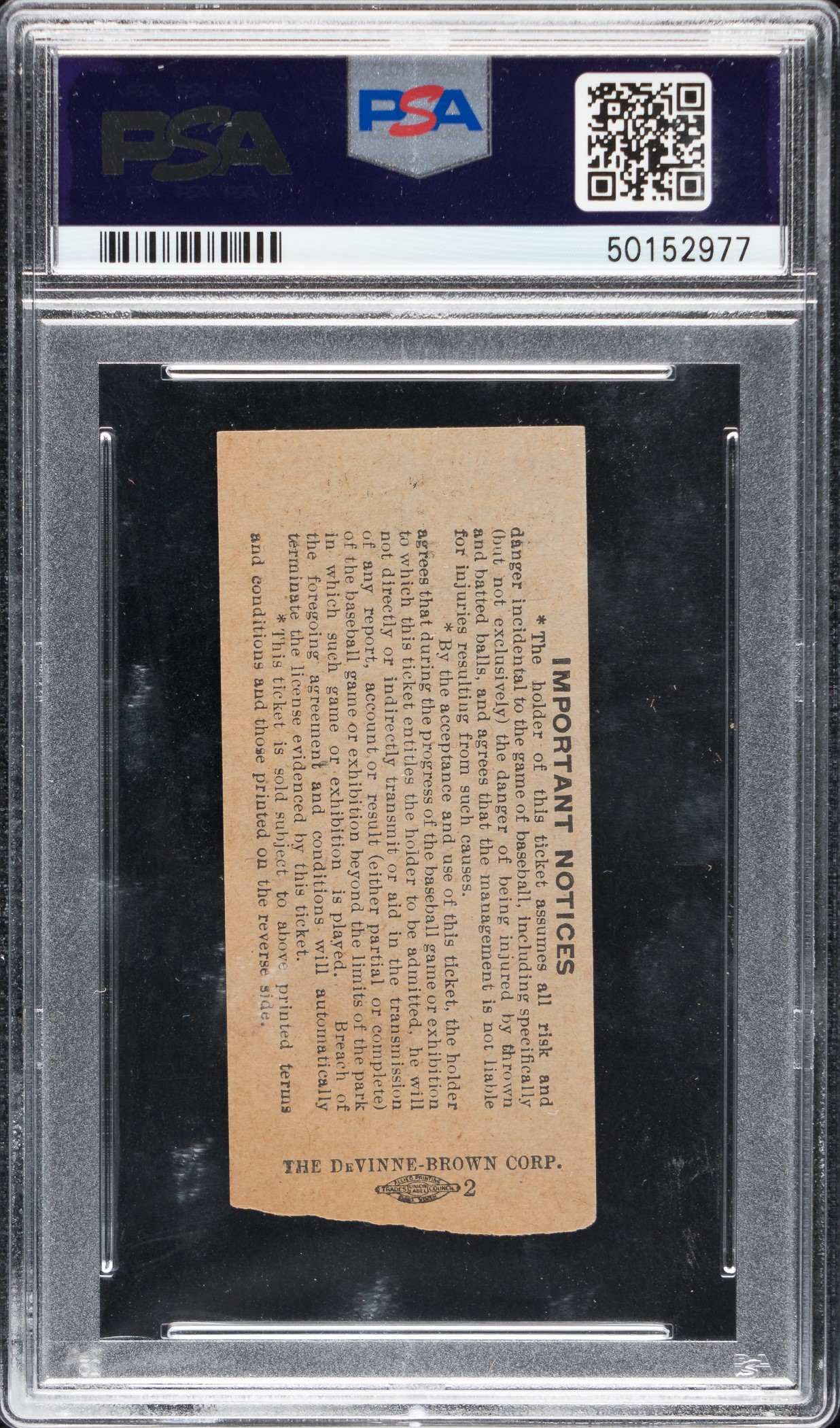
The rarity of this ticket stub should not be surprising. Most fans didn't save their tickets to begin with and nothing happened in the game that would have given anyone pause before discarding it. Also, it wasn't until two days later that anyone realized the game's historical significance. This is one of the most important "final game" tickets we have ever offered and the fact that it is also the highest-graded example adds to its appeal. The ticket (1.5 x 3 inches) displays the number "8" on the front, denoting the Yankees' eighth scheduled game of the 1939 season. The letter "G" under the "8" denotes the year, 1939. Only light handling wear is evident and the ticket stub is free of any creases or tears. An outstanding example of this historically significant and rarely seen ticket stub. Reserve $2,500. Estimate (open).
The game, which was briefly interrupted by a rain delay, was fairly uneventful as games go. The Yankees, who were having trouble scoring runs early in the season, lost the game 3-2. Gehrig was off to a surprisingly slow start that year, and he continued his slump that day, going hitless in four at-bats, which dropped his average to .143. Making the game even more forgettable was the fact that it took place on the same day as the opening of the 1939 World's Fair in Queens, where over 600,000 people flocked to gaze upon the wonders of the future. While the Yankees took the game in stride and looked forward to an off day before traveling to Detroit for the start of a twelve-game road trip, Gehrig was coming to the stark realization that his career was coming to an end. He knew something was wrong, but he had no idea why his physical strength and coordination had deserted him almost overnight. According to Jonathan Eig, in his biography of Gehrig titled Luckiest Man, Gehrig's wife Eleanor described Gehrig's condition the next day as "troubled, shaken, even shocked." Gehrig then confided in her how much his slump was weighing on his mind:
"They don't think I can do it anymore," he told her. "Maybe I can, maybe I can't. But they're talking about it now, they're even writing about it. And when they're not talking, I can almost feel what they're thinking. Then, I wish to God that they would talk - you know, say anything. . . ." "Sweetheart," Eleanor replied, "you've done it for thirteen years without a day off. The only thing that matters is whether you get the same feeling of satisfaction out of it." "How can I get the same feeling of satisfaction out of it? I'm not giving them the same thing, so I'm not getting the same thing. You think they're hurting me. But I'm hurting them, that's the difference."
It was then that Gehrig decided that he would finally end the streak, but even he never contemplated that it would also signal the end of his career. The following day, on May 2, as the team arrived in Detroit, Gehrig met with manager Joe McCarthy in his hotel room and told him that he was taking himself out of the lineup. When confronted by the press following McCarthy's announcement, Gehrig was quoted as saying "I haven't been a bit of good to the team since the season started. It would not be fair to the boys, to Joe or to the baseball public for me to try going on. In fact, it would not be fair to myself, and I'm the last consideration. It's tough to see your mates on base, have a chance to win a ballgame, and not be able to do anything about it. McCarthy has been swell about it all the time. He'd let me go on until the cows came home, he is that considerate of my feelings, but I knew in Sunday's game that I should get out of there."
The rarity of this ticket stub should not be surprising. Most fans didn't save their tickets to begin with and nothing happened in the game that would have given anyone pause before discarding it. Also, it wasn't until two days later that anyone realized the game's historical significance. This is one of the most important "final game" tickets we have ever offered and the fact that it is also the highest-graded example adds to its appeal. The ticket (1.5 x 3 inches) displays the number "8" on the front, denoting the Yankees' eighth scheduled game of the 1939 season. The letter "G" under the "8" denotes the year, 1939. Only light handling wear is evident and the ticket stub is free of any creases or tears. An outstanding example of this historically significant and rarely seen ticket stub. Reserve $2,500. Estimate (open).